Do you find yourself hesitating when stepping over a curb? Have you or a loved one experienced a scary slip, trip, or fall recently? Balance is something we often take for granted until it starts to decline. The ability to stay upright and move confidently is crucial for maintaining independence, activity, and a high quality of life.
At ECRC Physical Therapy in Lisbon, CT, and Killingly, CT, we don’t just treat injuries; we build resilience and confidence. Our expert physical therapists are dedicated to helping you understand and improve your body’s complex balance system. We believe that with the right guidance, everyone can ALIGN, STABILIZE, and THRIVE.
Understanding the Balance System: Why Balance is Preventative
Balance is not a single skill; it’s a coordinated effort between three major bodily systems:
- Vision (Eyes): This system tells your brain where you are in space relative to your surroundings.
- Somatosensory (Joints & Muscles): Sensors in your skin, muscles, and joints tell your brain what surfaces you are standing on and how your body is positioned.
- Vestibular (Inner Ear): This is the internal gyroscope, sensing head movements and changes in gravity.
When any one of these systems falters—due to illness, age, injury, or a sedentary lifestyle—your risk of falling skyrockets. Improving your balance is the single most effective preventative measure you can take against a fall, which can lead to fractures, head injuries, and a devastating loss of independence.
Physical Therapy for Balance: How Can a PT Help Me Gain Stability?
A physical therapist is the ideal professional to help you improve balance because they understand the mechanics of movement and the neurology of balance.
The ECRC PT Approach to Balance
- Comprehensive Assessment: We start with a detailed evaluation to identify which system is underperforming. We look at your posture, gait pattern, strength, range of motion, and reactions to challenging situations (like standing on uneven ground).
- Targeted Training: Based on the assessment, your physical therapist develops a highly customized program. This goes far beyond general exercise; it involves specific, graded challenges designed to improve your brain’s ability to process incoming information and then be able to process and accommodate changes faster and more effectively.
- Functional Integration: We ensure the improvements translate to real-life activities, whether it’s navigating stairs, carrying groceries, or simply getting out of a chair.
Why is Physical Therapy for Balance Important for Seniors, Especially After a Fall?
For seniors, a fall often triggers a cycle of fear and self-induced inactivity. After a fall, many people restrict their movement, which ironically leads to a further decline in strength and balance—increasing the risk of another fall.
A physical therapy program breaks this cycle:
- Reduces Fear of Falling: By practicing challenging but safe exercises under the supervision of a physical therapist, you rebuild confidence (the “C” in our class aims to improve your confidence).
- Identifies Cause of the Fall: A PT determines if the fall was due to weakness, a vestibular issue, a medication side effect, or environmental factors.
- Restores Independence: The ultimate goal is to get you back to your desired activity levels without the constant worry of losing your footing.
Strengthening for Stability: What Muscles Are Strengthened to Improve Balance?
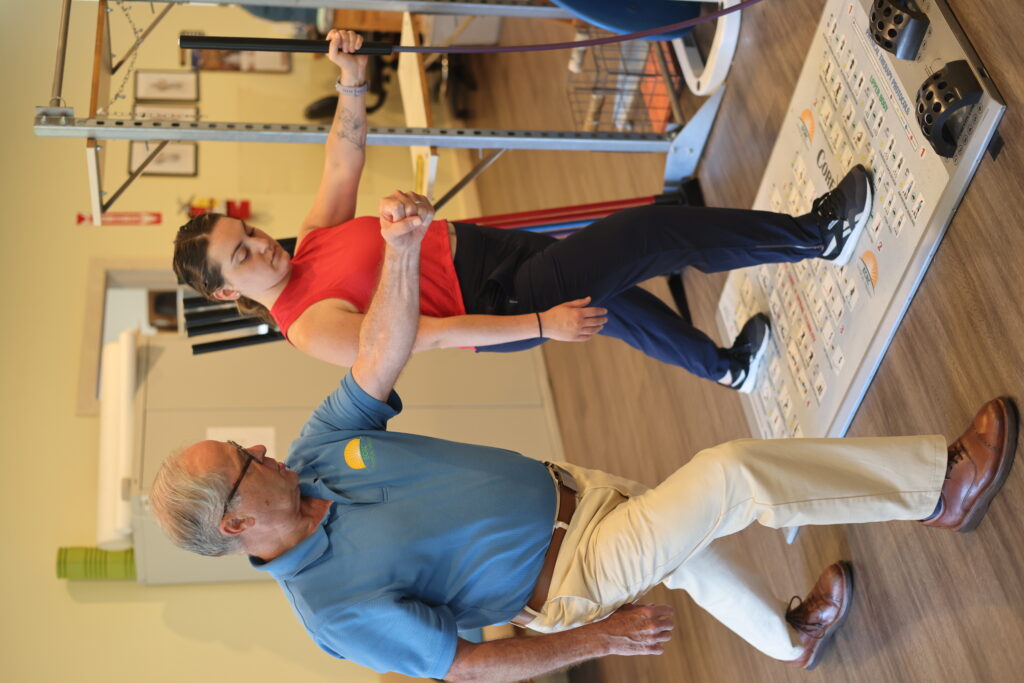 While some people think balance training means just standing on one leg, it’s actually a full-body effort that requires coordinated strength.
Physical therapy balance programs focus heavily on the core muscles and the lower extremity stabilizing muscles:
- Core (Trunk) Muscles: Strong abdominal and back muscles are essential for maintaining an upright posture and keeping your center of gravity stable when you move.
- Hip Muscles (Glutes): The gluteal muscles (glute max, med, and min) are critical for hip stability and preventing the knee from collapsing inward—a common cause of instability.
- Ankle & Foot Muscles: These are your immediate shock absorbers. Strengthening the small muscles around the ankle improves your ability to react quickly to uneven surfaces (like loose gravel or rugs).
Tools for Confidence: What Equipment Can Help with Balance?
At ECRC Physical Therapy, we utilize various tools and techniques to challenge and train your balance system safely:
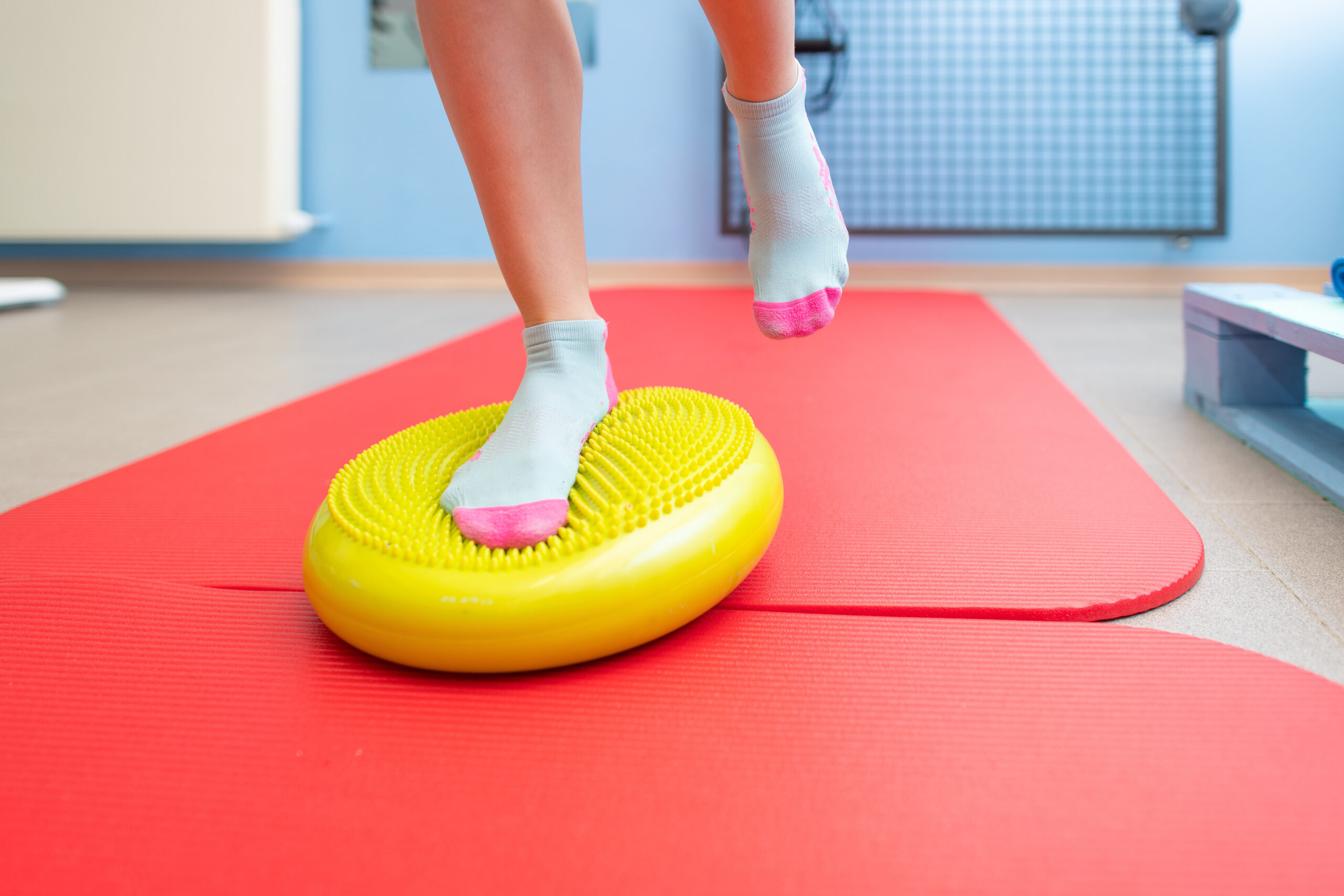
- Balance Boards and Foam Pads: These deliberately create unstable surfaces to challenge your ankle and core stabilizers.
- Visual-Vestibular Training: Exercises that challenge the eyes and inner ear, such as head movements while standing or walking.
- Gait Training: Using specialized equipment or markers to normalize your walking pattern, which is fundamental to stability.
- Resistance Tools: Light resistance bands or weights are used to build strength in the stabilizing muscles mentioned above.
Join Our Balance Program: ALIGN. STABILIZE. THRIVE.
Throughout the year, ECRC periodically offer 5-WEEK BALANCE PROGRAMS designed to improve your strength, balance, activity levels, confidence, and general well-being. Each session kicks off with a FREE Informational Session for our past and current patients to introduce you to the program and explain The Balance System of the Human Body.
This physical therapist-led session is a fun and safe way to try out the class format. Come learn how our comprehensive program can help you step confidently into the future! Contact us at 860-376-2564 to for information on the next upcoming session!
Can’t make it to the next session? Call our Lisbon, CT office to schedule a personalized balance assessment!
Don’t wait until a fall changes your life. Take control of your balance today!
ECRC Physical Therapy – Lisbon, CT [Phone: 860-376-2564]
ECRC Physical Therapy – Killingly/Dayville, CT [Phone: 860-779-0150]


