
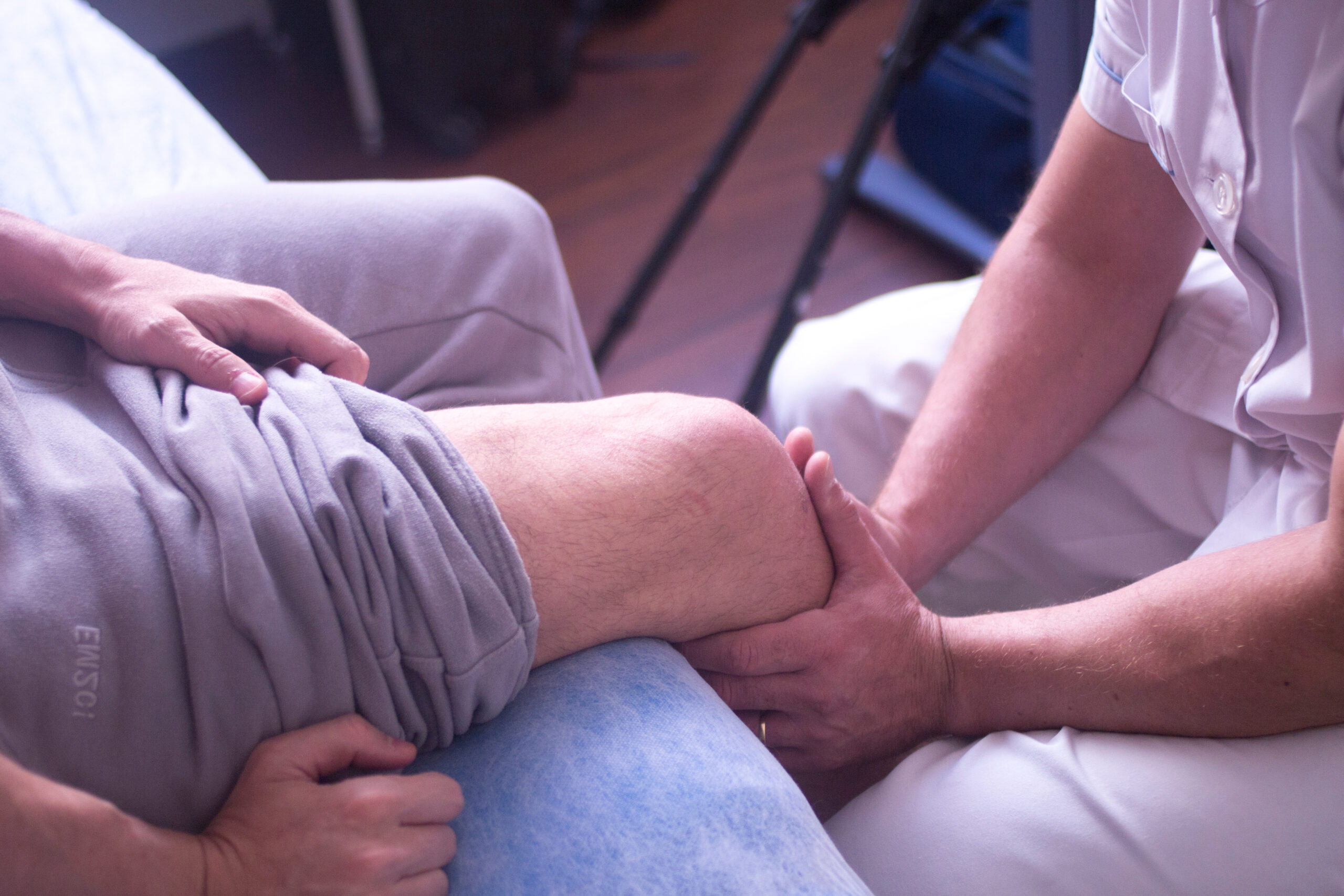
Knee and patellar pain treatment using a physical therapy approach aims to correct the alignment (trunk, hip, knee and foot) and muscle imbalances in the trunk, hips and knees causing pain around or behind the kneecap. At ECRC Physical Therapy in Eastern CT, we treat patellofemoral pain, patellar tendinitis, and post-surgical knees by retraining the trunk, hip, knee and ankle/lower leg muscles that control how the kneecap aligns and tracks.
What Conditions Benefit Most from Patellar-Focused PT?
If you’re searching for help with knee and patellar pain, you’re likely dealing with one of the following conditions that our Lisbon and Dayville teams treat daily:

- Patellofemoral Pain Syndrome (“Runner’s Knee”): Pain behind or around the kneecap caused by poor tracking during repetitive motion.
- Patellar Tendinitis (“Jumper’s Knee”): Overuse inflammation of the tendon connecting the kneecap to the shin, common in athletes and weekend warriors alike.
- Chondromalacia Patella: Softening or breakdown of cartilage under the kneecap, often worsened by weak hip stabilizers.
- Post-Surgical Recovery: Essential rehabilitation following ACL reconstruction, meniscus repair, or total knee replacement.
- IT Band & Tracking Dysfunction: When a tight IT band or weak glutes pull the kneecap off its natural path.
The ECRC Difference: Fixing the Cause, Not Just the Symptom
Most people grab a brace, an ice pack and OTC (Over the Counter) pain or anti-inflammatory medications hoping the pain fades. It rarely lasts. Our process includes:
- Movement & Alignment Assessment: Analyzing your static and dynamic alignment when squatting, during gait, or when running find exactly where and when the kneecap is tracking incorrectly.
- Targeted Activation: Re-engaging the often-underused hip abductors and external rotator muscles as well as getting greater recruitment of the VMO (inner portion of the quad) and that keep the kneecap centered.
- Functional Loading: Progressive and graded strengthening by engaging hip and knee muscle groups to regain functional stability with real movements — stairs, squatting, running, or returning to sport — so the fix holds up outside the clinic.
Frequently Asked Questions
Why does my knee hurt when I go up or down stairs?
Pain on stairs is a classic sign the kneecap isn’t tracking smoothly in its groove, usually because of weak hip or quad muscles rather than damage to the joint itself.
Is it safe to keep running with patellar pain?
It depends on the cause. Mild tracking issues can sometimes be managed with modified training, but persistent pain usually means the underlying mechanics need to be corrected before mileage increases.
Do I need an MRI before starting physical therapy for knee pain?
Not always. Many causes of patellofemoral pain can be identified through a hands-on movement assessment, and imaging is typically reserved for cases with swelling, instability, or suspected ligament or meniscus injury.
How long does it take to resolve knee and patellar pain with PT?
Most patients notice meaningful improvement within 4 to 6 weeks of targeted treatment, though full recovery time depends on the underlying cause and activity goals.
Take the Pressure Off Your Knees
You shouldn’t have to choose between staying active and staying pain-free. With over 44 years of experience in New London and Windham counties, ECRC is the gold standard for orthopedic recovery.
If you are experiencing knee pain in any form, it is important to see a doctor for treatment as soon as possible. The longer you ignore your pain, the more chance there is for greater injury.
Schedule Your Consultation at our Lisbon or Dayville Clinic Today